Energy Certificate: What It Is, What It's For, and When It's Required
Everything you need to know about the energy performance certificate in Portugal — mandatory situations, the process, costs, and how to improve your home's energy class.
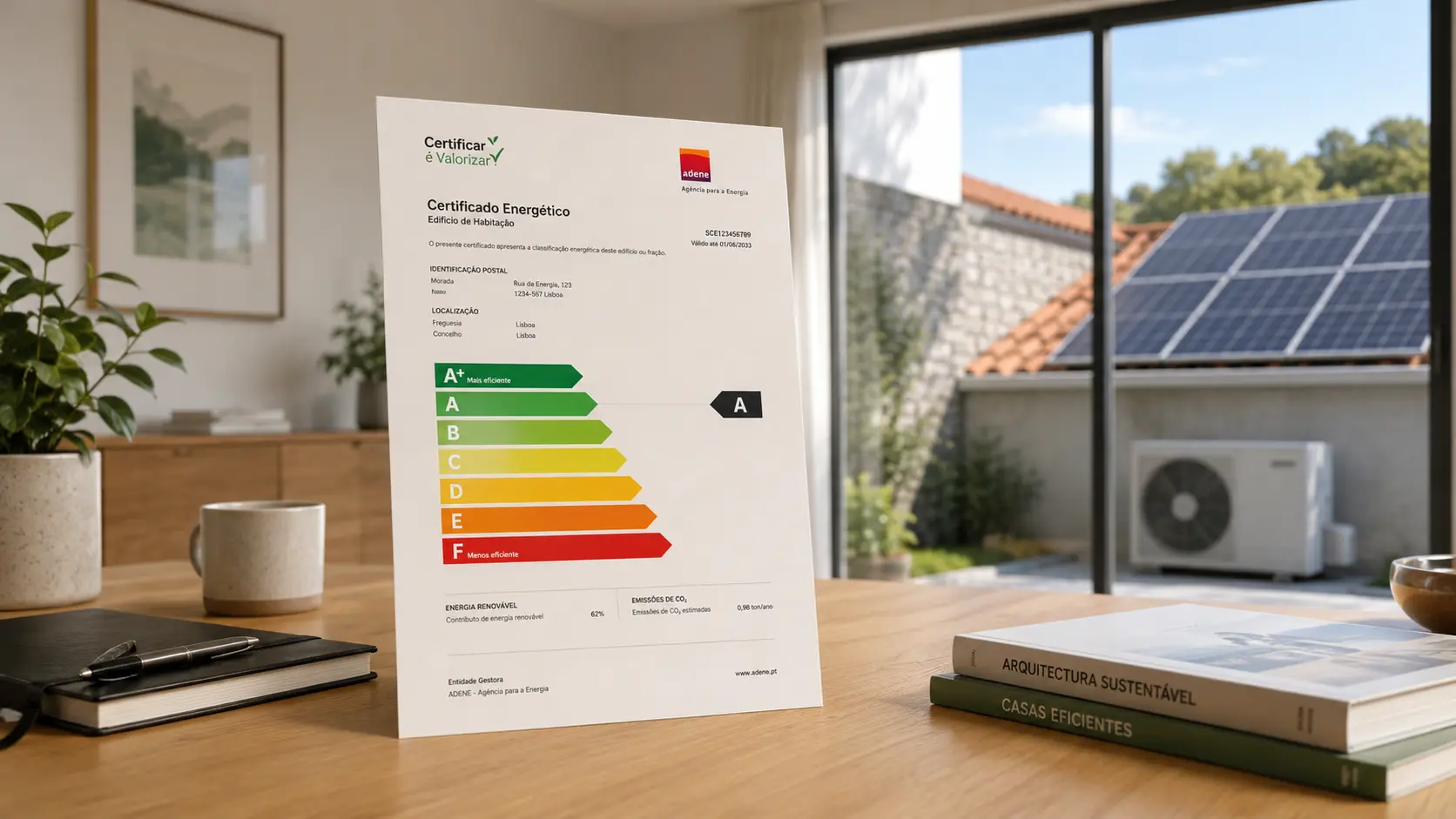
If you've recently bought, sold, or rented a property in Portugal, you've almost certainly come across the term energy certificate. But what exactly is it, what does it mean for your home, and when are you legally required to have one? In this complete guide, kiloJoule — Energy Certificate Specialists based in São Miguel, Azores — break down everything you need to know about the energy certificate in Portugal.
Table of Contents
What Is an Energy Certificate?
The energy certificate (in Portuguese, certificado energético) is an official document issued under Portugal's SCE — Sistema de Certificação Energética dos Edifícios (Building Energy Certification System). It rates a building's energy efficiency on a scale from A+ (most efficient) to F (least efficient), and identifies measures to improve performance.
The certificate is issued by Perito Qualificado (PQ) — a qualified expert accredited by ADENE, the Portuguese Energy Agency. It is valid for 10 years for residential buildings and must be renewed whenever significant energy improvements are made. Here is what the energy classes mean:
- •A+ / A — Near-zero or very high efficiency. Typical of new-builds and recently renovated homes.
- •B / B- — Good performance. The property meets modern standards with minor room for improvement.
- •C — Average performance. Common in homes built before 2006.
- •D / E / F — Poor performance. Significant energy losses through inadequate insulation, outdated heating systems, or inefficient windows.
When Is the Energy Certificate Mandatory?
Portuguese law (Decree-Law 101-D/2020) makes the energy certificate mandatory in several situations. Failing to present it can result in fines of up to €3,740 for individuals. Here are the main obligatory scenarios:
- •Sale of residential or commercial property — The certificate must be obtained before the property is advertised and presented at the notary deed.
- •Long-term rental (≥ 4 months) — Landlords must provide the certificate to tenants when signing the lease contract.
- •New construction — All new buildings require a certificate before the usage license is issued.
- •Major renovations — Works that exceed 25% of the building's value trigger a new certification requirement.
- •Public buildings over 250 m² — Must display the certificate in a visible location.
- •Requesting certain permits — Some municipal permits and financing products (such as green mortgages) require a valid certificate.
Even when it is not legally required, having an energy certificate is useful: it signals the true running costs of the property and can be a strong negotiating point — either by demonstrating efficiency or by justifying investment in upgrades.
How to Get an Energy Certificate: Step by Step
Getting your energy certificate is a straightforward process when you work with a certified technician. Here is the typical workflow in Portugal (including the Azores):
- •Step 1 — Gather documents: Collect the property's floor plans, building permit, construction year, and any recent renovation records. If you do not have floor plans, the technician can measure on-site.
- •Step 2 — Schedule the inspection: Contact an ADENE-accredited Perito Qualificado. They will visit the property to assess insulation, windows, HVAC systems, solar exposure, and domestic hot water equipment.
- •Step 3 — Technical assessment: The expert runs energy simulations using the REH (residential) or RECS (commercial) methodology to calculate the nominal energy consumption of the building.
- •Step 4 — Certificate issuance: The PQ submits the results to ADENE's national portal (SCE). The certificate is registered and a unique code (número de registo) is assigned. You receive the official PDF document.
- •Step 5 — Receive improvement recommendations: The certificate always includes a list of suggested improvements (IMP) with estimated savings. This is invaluable for planning upgrades.
The entire process typically takes 5–10 working days from the inspection date, depending on the complexity of the property. In the Azores, kiloJoule completes inspections across all of São Miguel island and delivers the certificate digitally.
How to Improve Your Energy Class
If your property is currently rated C, D, E, or F, there are concrete measures that can push it into a higher class — reducing your energy bills and increasing the property's market value. The most impactful improvements, in order of return on investment, are:
- •Install a heat pump for heating and domestic hot water. Modern inverter heat pumps can achieve COP values of 4–5, replacing fossil-fuel boilers and dramatically cutting consumption.
- •Add solar panels (PV or thermal). Photovoltaic panels generate electricity for self-consumption; solar thermal panels reduce hot water costs by up to 70%.
- •Upgrade windows and glazing to double or triple-glazed units with thermal-break frames to reduce heat loss.
- •Insulate walls and roof. In older Azorean homes, poor wall insulation is a primary cause of low ratings.
- •Install a high-efficiency air conditioning system with inverter technology (A+++ rated). It contributes to both heating and cooling scores.
- •Add mechanical ventilation with heat recovery (MVHR) to improve indoor air quality without losing energy.
Even a single improvement — such as installing a heat pump or adding solar panels — can jump a property by one or two energy classes. At kiloJoule, we carry out the energy certificate inspection and then help you implement the recommended improvements, so you can see the full cycle from assessment to upgrade in one place.
About kiloJoule
kiloJoule is a certified HVAC and energy company based in São Miguel, Azores. Our team of ADENE-accredited engineers and F-gas certified technicians specialises in energy certificates, heat pump installation, solar panels, and air conditioning. We serve residential and commercial clients across the island with honest advice and transparent pricing.
Frequently Asked Questions
How much does an energy certificate cost in Portugal?
Prices typically range from €150 to €350 for standard residential properties, depending on the size and complexity of the building. Larger or commercial properties cost more. At kiloJoule we provide a fixed quote before any work begins — contact us for a no-obligation estimate.
How long is an energy certificate valid?
An energy certificate is valid for 10 years for residential buildings. It must be renewed if significant energy improvements are made (since the rating will change) or if the property changes ownership before the 10-year period ends and a new certificate is required for the transaction.
Can I sell or rent my property without an energy certificate in Portugal?
No. Portuguese law requires a valid energy certificate for any property sale or long-term rental. Advertising a property without displaying the energy class and certificate number is a legal infringement and can result in fines. Notaries are also required to record the certificate number in the deed.
Is the energy certificate mandatory in the Azores?
Yes. The SCE legislation applies across all of Portugal, including the Azores. The same rules and obligations apply in São Miguel as on the mainland. kiloJoule is an ADENE-accredited provider operating throughout São Miguel island.
Can I improve my energy certificate rating after it is issued?
Yes. If you carry out qualifying improvements — such as installing a heat pump, solar panels, or better insulation — you can request a new assessment. The updated certificate will reflect the improved rating. This is particularly useful before a sale to justify a higher asking price.
Need an Energy Certificate in the Azores?
kiloJoule's accredited technicians cover all of São Miguel island. Get your certificate quickly, with clear pricing and full ADENE registration.
