Home Solar Panels: Complete Guide to Installation and Consumption
Installing solar panels at home lets you cut your electricity bill and gain real energy independence. Discover how the technology works, which systems are available, and how much you can save in São Miguel, Azores.
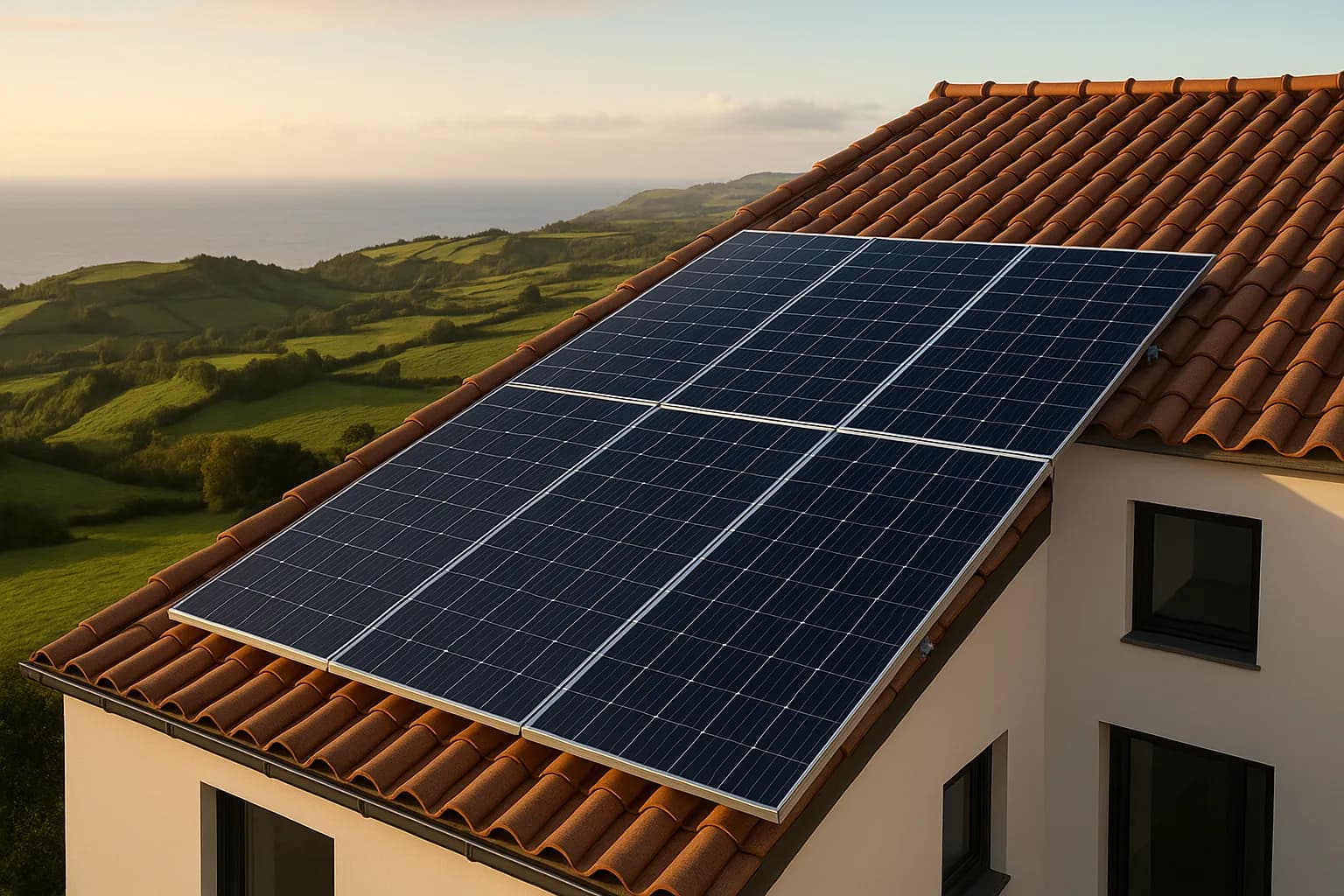
With electricity prices steadily rising, more and more families in São Miguel are turning to solar panels as a way to cut costs and gain energy independence. A properly sized photovoltaic system can cover a significant share of a home's consumption, taking advantage of the Azores' excellent sun exposure. This guide explains how solar panels work, which system types are available, what the installation process looks like, and what to expect in terms of cost, savings, and maintenance.
Table of Contents
How Do Solar Panels Work?
Photovoltaic solar panels capture sunlight and convert it directly into electricity through the photovoltaic effect. Each panel is made up of silicon cells that release electrons when exposed to light, generating a direct current (DC).
For that energy to be usable in your home, the system relies on a few key components:
- •Solar panels: capture sunlight and produce direct current (DC)
- •Inverter: converts direct current into alternating current (AC), compatible with the home electrical grid
- •Bidirectional meter: measures energy consumed and energy fed back into the grid, where applicable
- •Battery (optional): stores surplus energy produced during the day for use at night or on lower-production days
Solar System Types for Your Home
Before installing solar panels at home, it's important to understand the available configurations and choose the one that best fits your consumption pattern:
- •Self-consumption without battery: energy produced is used directly at home during the day, and any surplus is fed into the grid, typically under a compensation or third-party sale scheme. This is the most affordable way to get started.
- •Self-consumption with battery storage: stores surplus energy for use at night or on cloudy days, maximising energy independence. Higher upfront cost, but significantly increases the share of solar energy actually used.
- •Grid-tied system: the most common setup in Portugal — the system stays connected to the public grid, which provides backup whenever solar output isn't enough.
- •Off-grid system: operates fully independently from the electrical grid, requiring larger battery capacity. Best suited to isolated properties without grid access.
For most homes in São Miguel, a grid-tied self-consumption system, with or without a battery, offers the best balance between investment and savings.
How Solar Panel Installation Works
Installing a residential photovoltaic system follows a structured process, usually completed in just a few days. Here are the main steps:
- •Site survey and assessment: a certified technician evaluates roof orientation and tilt, available shading, the home's energy consumption, and contracted power
- •System sizing: based on consumption and available space, the number of panels, inverter power, and whether a battery is needed are all defined
- •Design and registration: most residential installations in the Azores require prior registration with the Regional Directorate of Energy before connecting to the grid
- •Panel mounting: panels are fixed to the roof (or another structure) using mounts suited to the roof type, followed by inverter installation and wiring
- •Grid connection and certification: after installation, the system is inspected, the bidirectional meter is installed where applicable, and the system is registered so it can start producing
At kiloJoule, we manage the entire process — from the initial site survey to Regional Directorate of Energy registration — so switching to solar energy is simple and hassle-free.
Costs, Savings, and Consumption: How Much Can You Save?
The investment in solar panels varies depending on system size, installation type, and whether a battery is included. Several factors influence cost and savings:
- •Average household consumption: the higher your daily consumption, the greater the savings potential from solar self-consumption
- •System size (kWp): a typical home in São Miguel usually installs a system between 2 and 6 kWp, depending on consumption and available roof space
- •Sun exposure and roof orientation: south-facing roofs without significant shading produce more energy throughout the year
- •Battery storage: increases upfront investment but raises the self-consumption rate, especially for homes with higher night-time usage
- •Return on investment (payback): most residential systems in Portugal recover their initial investment within 5 to 8 years, continuing to generate savings for 20 to 25 years of panel lifespan
Thanks to São Miguel's climate, which delivers strong sun exposure for most of the year, residential photovoltaic systems achieve consistent production levels, making the investment especially attractive over the medium and long term.
About kiloJoule
kiloJoule is a certified HVAC and renewable energy company based in São Miguel, Azores. We specialise in solar panel installation, heat pumps, air conditioning, and energy certificates for residential, commercial, and institutional clients. Our mission is excellence in quality, safety, and environmental responsibility.
Frequently Asked Questions About Home Solar Panels
Is it worth installing solar panels in São Miguel?
Yes. São Miguel enjoys good sun exposure for most of the year, allowing residential photovoltaic systems to reach consistent production levels. Combined with rising electricity prices, solar self-consumption typically pays for itself within 5 to 8 years while continuing to generate savings for two decades or more.
How much does it cost to install solar panels on a home?
Costs depend on system size, roof type, and whether a battery is included. A small residential self-consumption system without a battery is the most affordable option, while larger systems with storage involve a higher upfront investment but achieve greater energy independence. Request a detailed, site-specific quote from a certified installer.
Do I need a battery to use solar energy at home?
No, a battery is not required. Many homes use a grid-tied system without storage, consuming solar energy directly during the day and drawing from the grid at night. A battery is optional and mainly worthwhile if you have significant night-time consumption and want to maximise self-consumption.
Do I need a permit to install solar panels in Portugal?
Most residential installations require prior registration with the Regional Directorate of Energy rather than a full construction permit. Your installer typically handles this registration on your behalf, along with the required documentation for grid connection.
How long does solar panel installation take?
For a typical home, physical installation — mounting the panels, inverter, and wiring — usually takes one to three days. Including the initial site survey, system design, and Regional Directorate of Energy registration, the full process from first contact to activation generally takes a few weeks.
Get a Free Solar Panel Quote
Ready to cut your electricity bill with solar energy? Contact kiloJoule for a no-obligation quote. Our certified team handles the entire process, from system sizing to Regional Directorate of Energy registration, across São Miguel and the Azores.
